
Preventing Freeze-Thaw Damage on Commercial Flat Roofs
Winter in Eastern Washington brings a unique set of challenges for local business owners. Between the sudden drops in temperature, the occasional snowfall, and the unexpected sunbreak that melts it all away, our weather patterns are anything but predictable. While these shifts might just mean adding or shedding a layer of clothing for us, they create a demanding environment for your building's exterior. One of the most significant threats to your property during these colder months is the freeze-thaw cycle, a natural process that can wreak havoc on structural materials if left unaddressed.
For businesses operating in industrial or retail spaces, understanding how to protect your property is crucial. A damaged roof doesn't just mean a leak; it can lead to ruined inventory, unexpected operational downtime, and a severe strain on your cash flow due to sudden, unbudgeted repair costs. At Above The Rest Roofing, Inc, we believe in proactive property management based on our core values of honesty, professionalism, and customer satisfaction. By understanding how the elements impact your building, you can take smart, preventative steps to keep your operations running smoothly all winter long.
The Science Behind the Freeze-Thaw Cycle
To grasp why winter weather is so challenging for building exteriors, it is helpful to understand the mechanics of the freeze-thaw cycle. Water is one of the few substances on earth that expands when it freezes—by about nine percent, to be exact. When precipitation falls on your property, water naturally seeks out the lowest points and smallest crevices.
During a cold night, that trapped water freezes and expands, exerting tremendous outward pressure on the surrounding materials. This expansion can force tiny micro-cracks to widen slightly. When the temperature rises the next day and the ice melts, the water flows even deeper into the newly enlarged crack. The following night, it freezes and expands again. Over weeks and months, this microscopic process compounds, leading to significant structural degradation, membrane tearing, and eventual water intrusion.
While pitched roofs have the advantage of gravity pulling water away quickly, level surfaces require a perfectly maintained drainage system to prevent water from pooling. If water sits on the surface, the freeze-thaw cycle has a much longer window of opportunity to cause damage. This makes proper commercial flat roof winter maintenance absolutely essential for the longevity of your investment. Whether your building utilizes a built-up system, modified bitumen, or a single-ply membrane, stopping water from pooling and freezing is your first line of defense.
Recognizing Freeze Thaw Cycle Damage on a Flat Roof
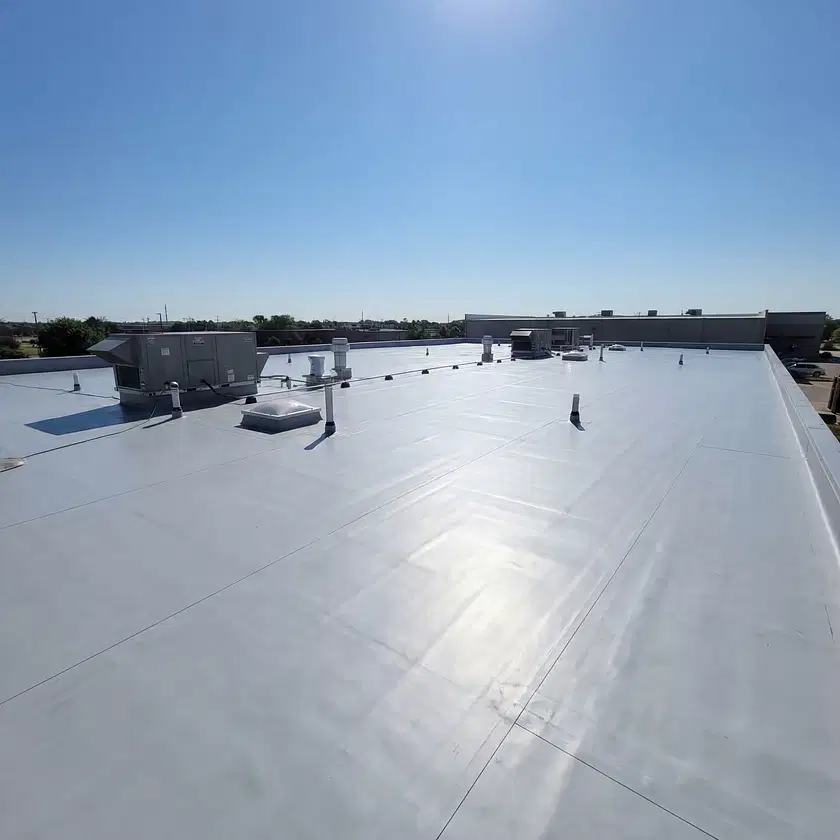
Because the damage occurs gradually and often at a microscopic level, spotting the early warning signs requires careful observation. One of the most obvious indicators of an impending problem is ponding water. If you notice water lingering on your roof for more than 48 hours after a rainstorm or snowmelt, your drainage system is likely compromised. This pooling water is exactly what fuels the freeze-thaw cycle.
Another sign of stress is the appearance of blisters or bubbling on the surface of the roofing membrane. These blisters occur when moisture gets trapped beneath the surface layer. As the moisture freezes, expands, and then evaporates, it separates the membrane from its underlying insulation, creating a raised pocket. If someone walks on a frozen blister, it can easily shatter or crack, creating a direct pathway for water to enter the building.
For properties utilizing EPDM roofing, which is a highly durable and synthetic rubber compound, the material is generally excellent at expanding and contracting with temperature changes. However, the seams and flashing points remain vulnerable. Preventing rubber roof leaks in winter usually comes down to inspecting these transitional areas. If the adhesive at the seams has begun to degrade, the freeze-thaw expansion will quickly exploit that weakness, pulling the seams apart and allowing moisture to seep into the insulation below.
The Role of Modern Technology in Roof Inspections
Historically, inspecting a large commercial roof during the winter was a hazardous and time-consuming task. Slips and falls on icy surfaces are a serious risk, and sending a crew up to walk a fragile, frozen membrane can sometimes cause more damage than it prevents. Today, technological advancements have completely transformed how we approach commercial roof diagnostics.
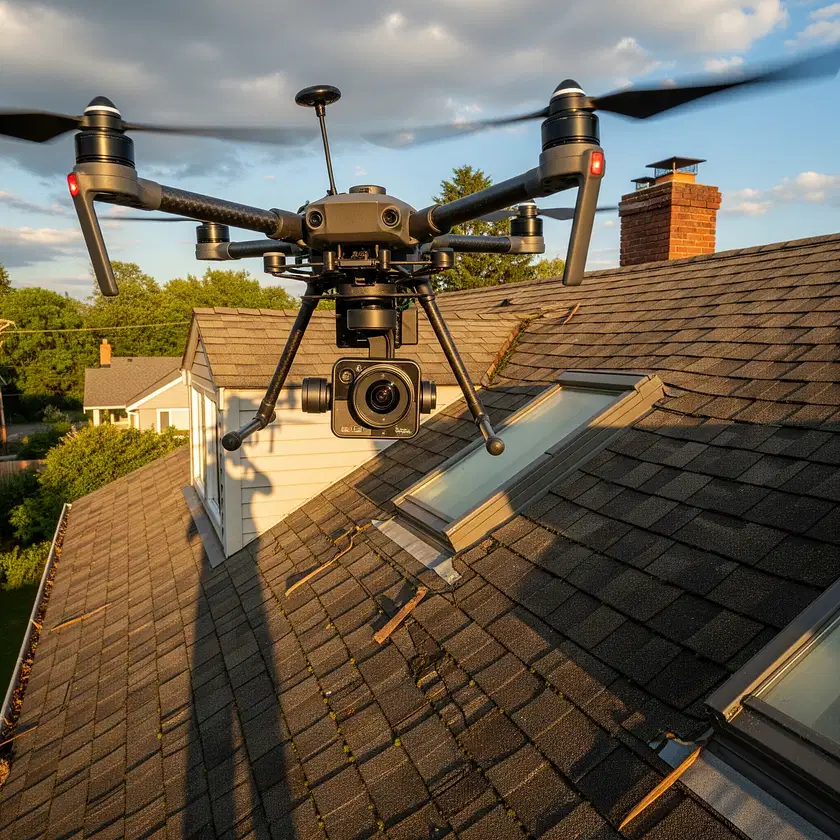
High-resolution drones have become an invaluable tool for winter maintenance. With a drone, professional roofers can safely conduct a comprehensive aerial inspection, capturing detailed imagery of your entire roof without ever setting foot on the membrane. This allows us to identify pooling water, structural stress, and debris blockages quickly and safely. By utilizing AI-powered measurement and estimating software alongside these visual inspections, we can provide you with transparent, accurate assessments and clear pricing estimates, helping you make informed decisions about your property long before a leak disrupts your business.
Essential Steps for Winter Preparation
Protecting your business requires a proactive approach. The best time to address potential winter damage is before the freezing temperatures arrive in full force. Here are the most critical steps to include in your maintenance routine:
Keep Scuppers and Drains Clear: The most effective way to combat the freeze-thaw cycle is to remove the water entirely. Ensure that all gutters, internal drains, and scuppers are completely free of autumn leaves, branches, and dirt. Water must have an unobstructed path off the roof.
Check Flashing and Penetrations: Flashing is the metal or membrane material used to seal the edges of the roof and areas around penetrations like HVAC units, vents, and skylights. These are the most common entry points for water. Ensure that the caulking and sealants around these areas have not dried out or cracked during the hot summer months.
Limit Foot Traffic: When a roof is frozen, the materials become rigid and more susceptible to punctures. Only allow authorized personnel onto the roof during the winter, and ensure they walk only on designated walkways to prevent accidental damage to the membrane.
Schedule Professional Maintenance: Partnering with a licensed and insured local contractor for comprehensive commercial roofing maintenance provides peace of mind. A trained professional knows exactly what signs of wear to look for and can perform preventative sealants and repairs before they escalate into costly emergencies.
Partnering for Long-Term Protection
Your commercial property is one of your most significant investments, and the roof is its primary shield against the elements. While the freeze-thaw cycle is an unavoidable reality of our regional climate, catastrophic water damage does not have to be. By staying vigilant, keeping drainage pathways clear, and addressing minor wear and tear early, you can significantly extend the lifespan of your roofing system.
If you are unsure about the current condition of your building's exterior, or if you want to establish a reliable maintenance plan to protect against winter weather, we are here to help. At Above The Rest Roofing, Inc, we specialize in high-quality flat roofing solutions designed to withstand the unique demands of the Tri-Cities and beyond. We combine traditional craftsmanship with modern technology to deliver transparent, lasting results.
Don't wait for a mid-winter leak to discover a vulnerability in your building. Protect your business, your inventory, and your peace of mind by scheduling a comprehensive inspection today. Reach out to our team in Pasco by visiting our contact us page, and let us help you keep your business above the rest this winter.